Architecture With Intent
Each provider chosen for a specific job — resilience, cost, capability or compliance.





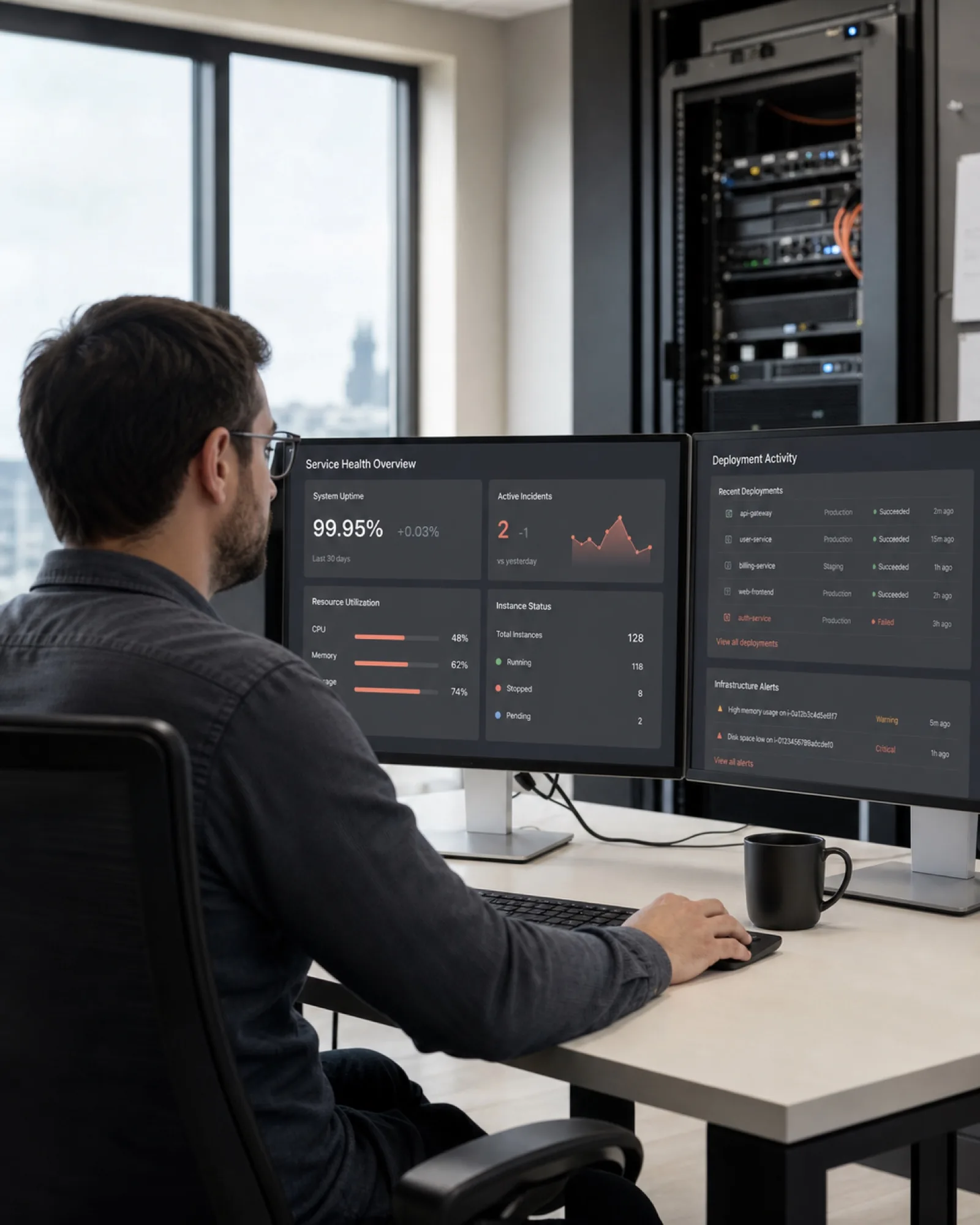
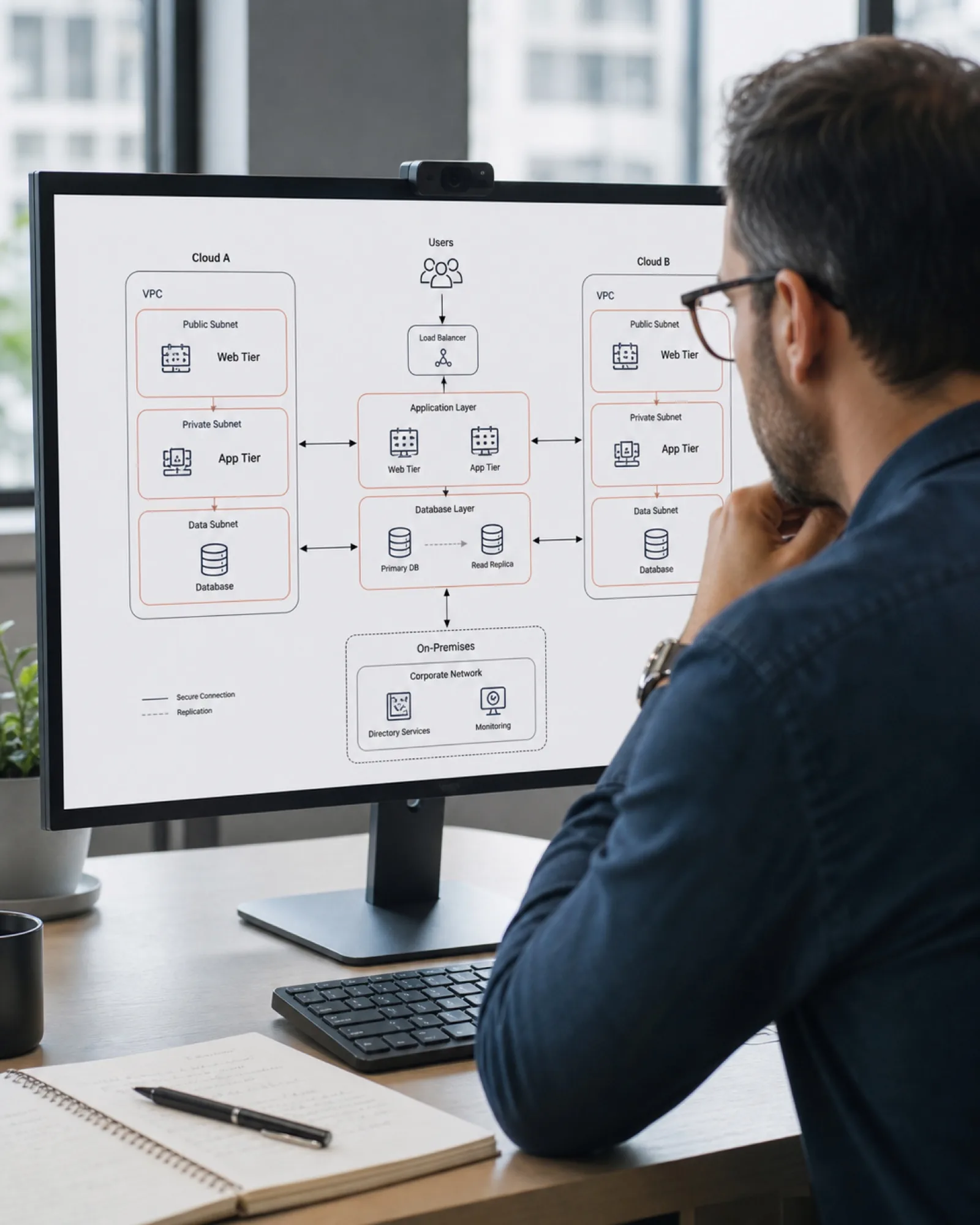
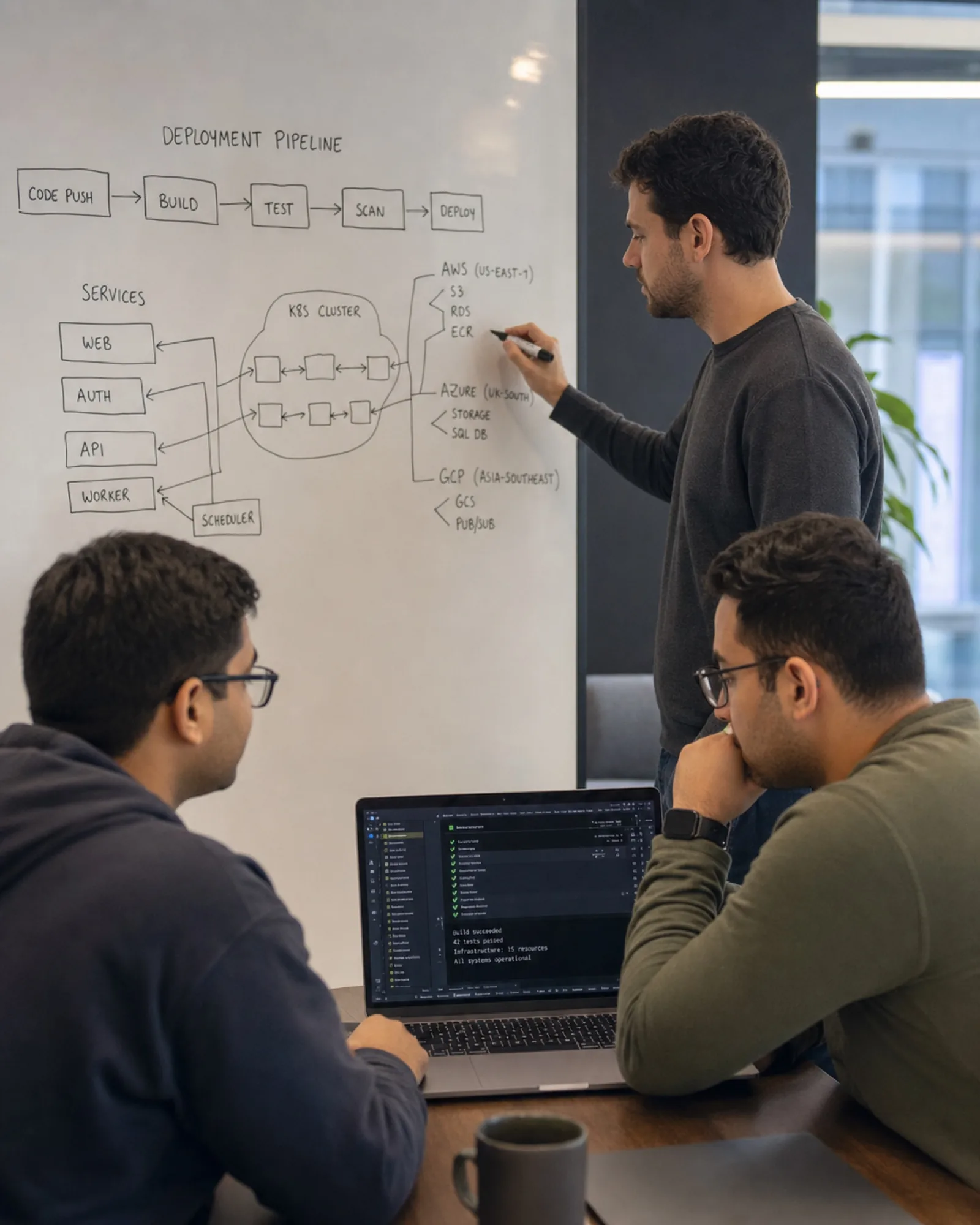
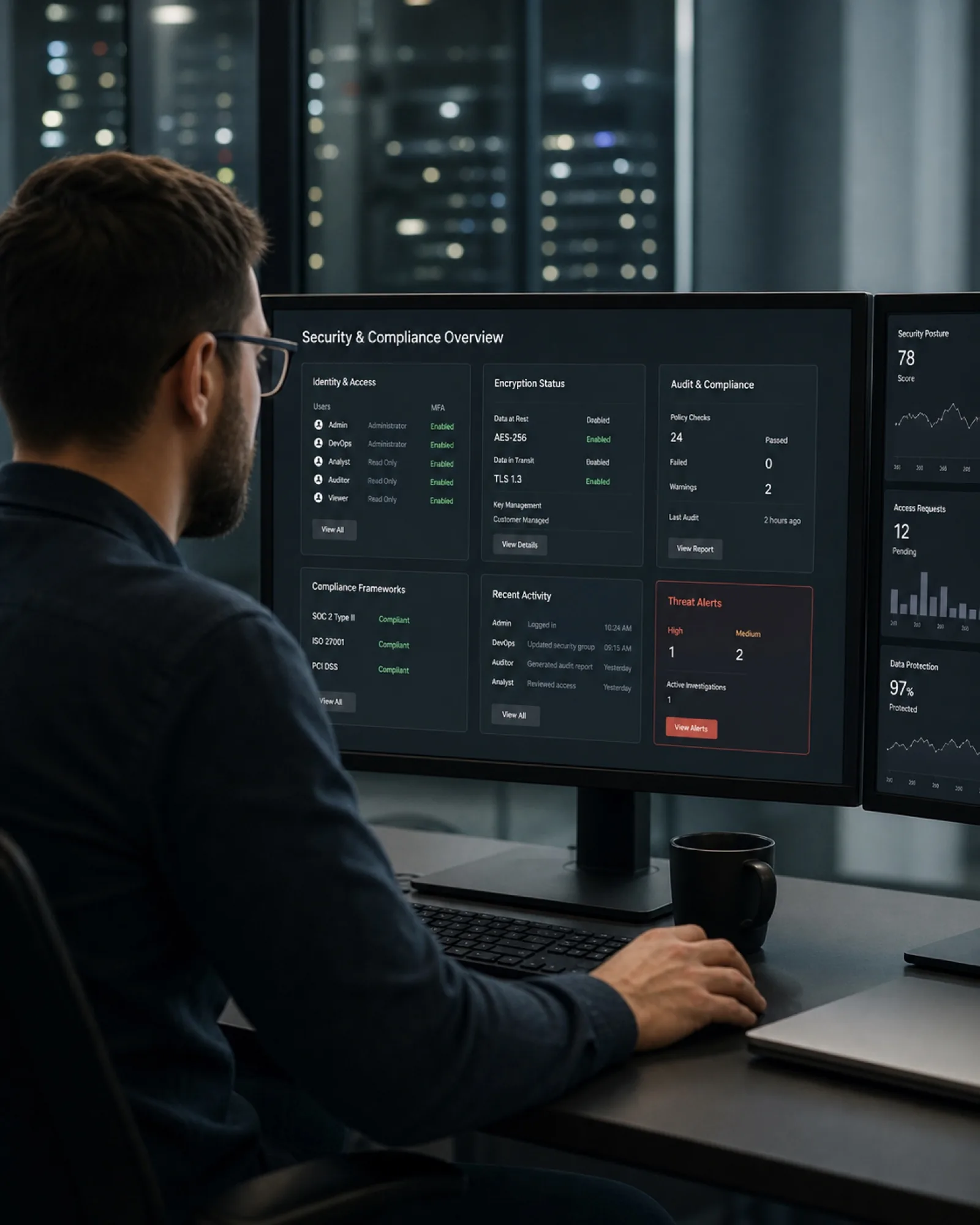
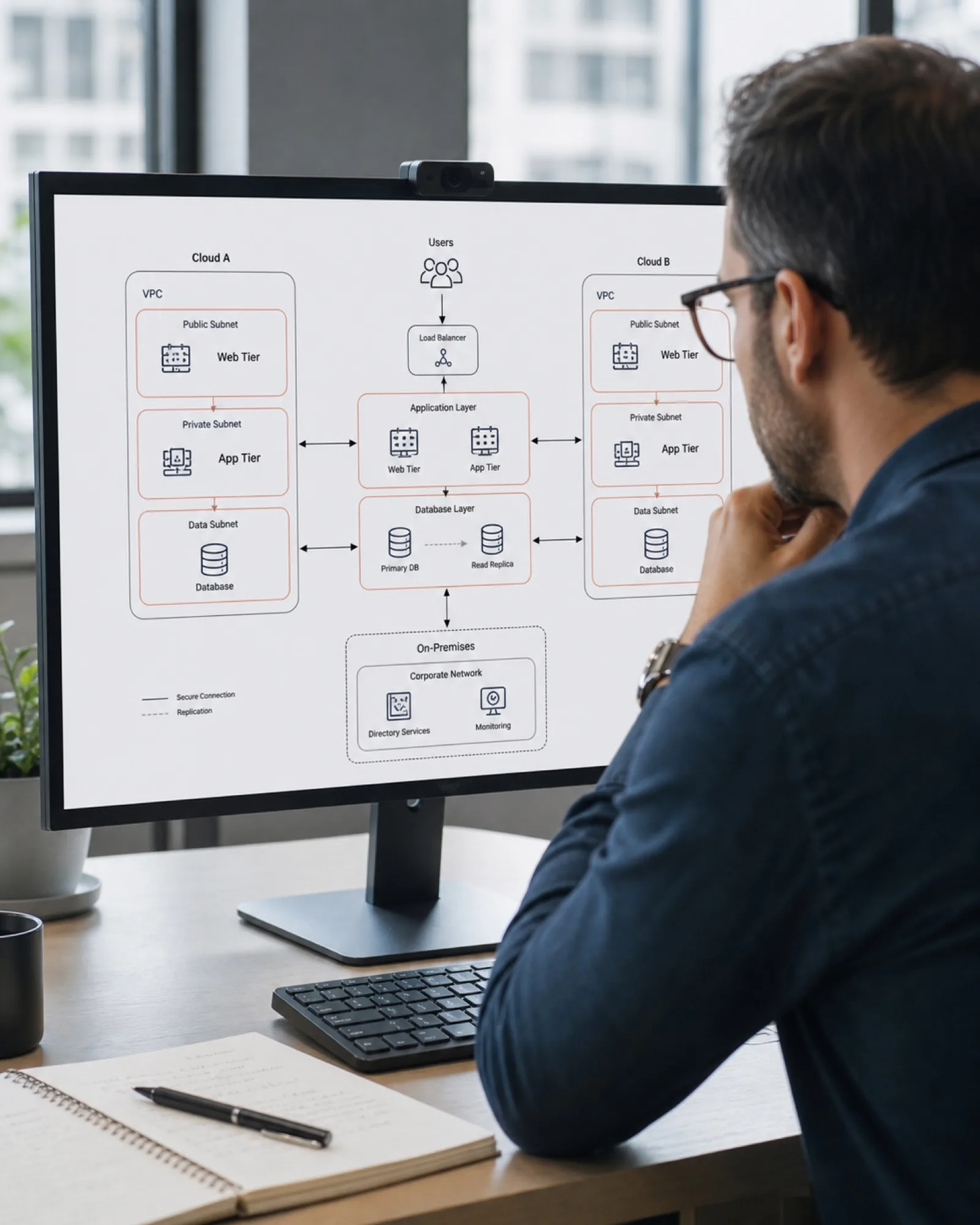
Multi-cloud done well is deliberate: production here, disaster recovery there, a specific managed service where it's genuinely best. We architect the split, standardize deployment across providers, and centralize monitoring so your team operates one system, not three.

Each provider chosen for a specific job — resilience, cost, capability or compliance.

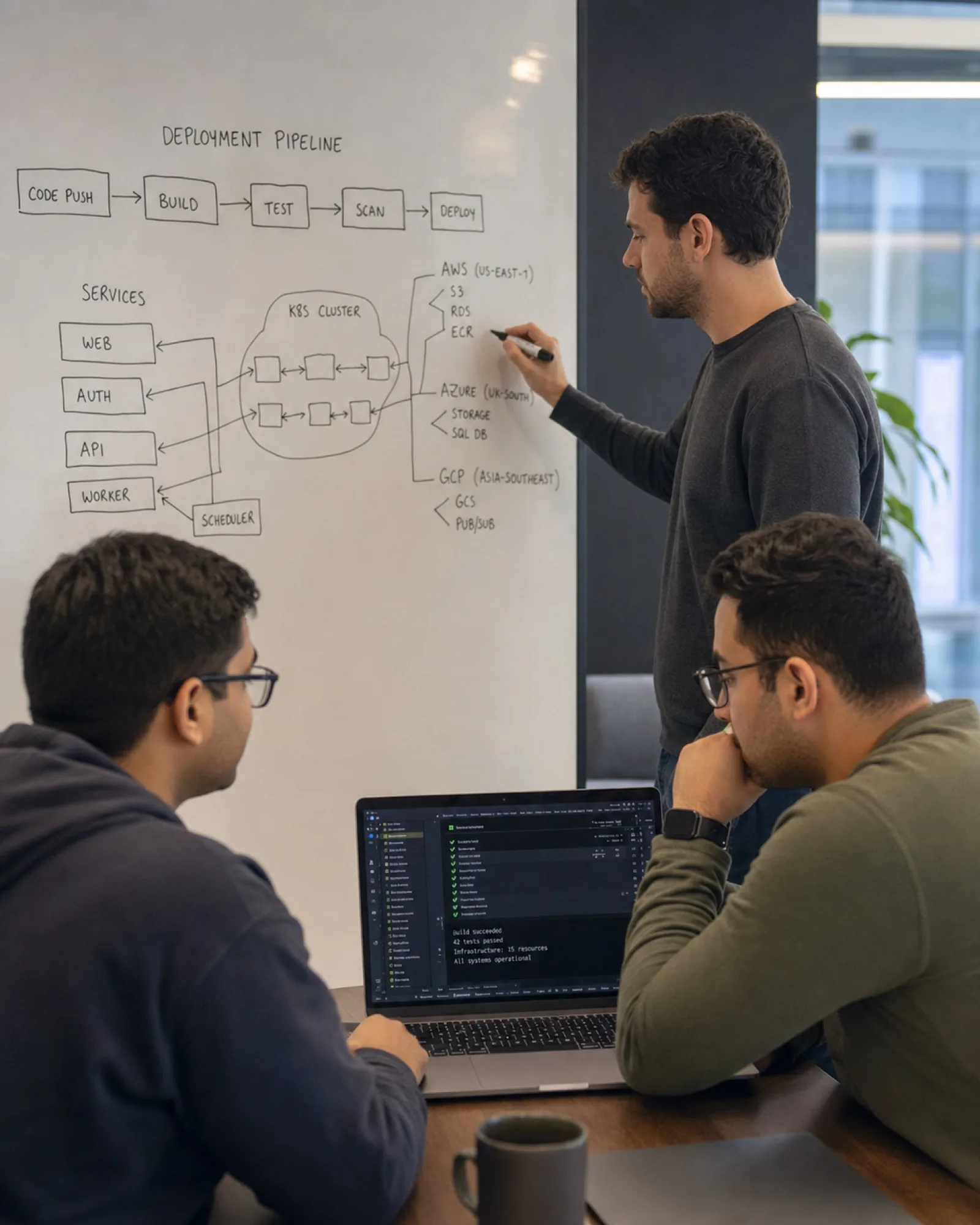
Unified deployment and monitoring across clouds, so complexity stays managed.

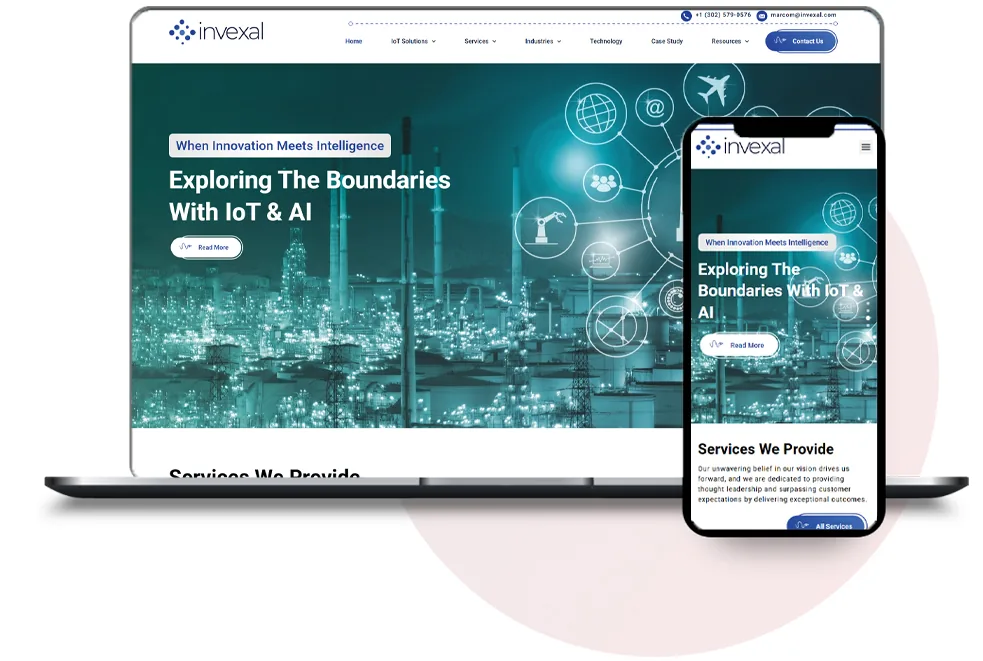
Invexal's platform ties consulting, hardware, connectivity and analytics into one operation — the kind of enterprise system where infrastructure architecture decides reliability.
Read Full Case Study
Cloud architecture designed for your workload, migrated in stages with rollback plans.

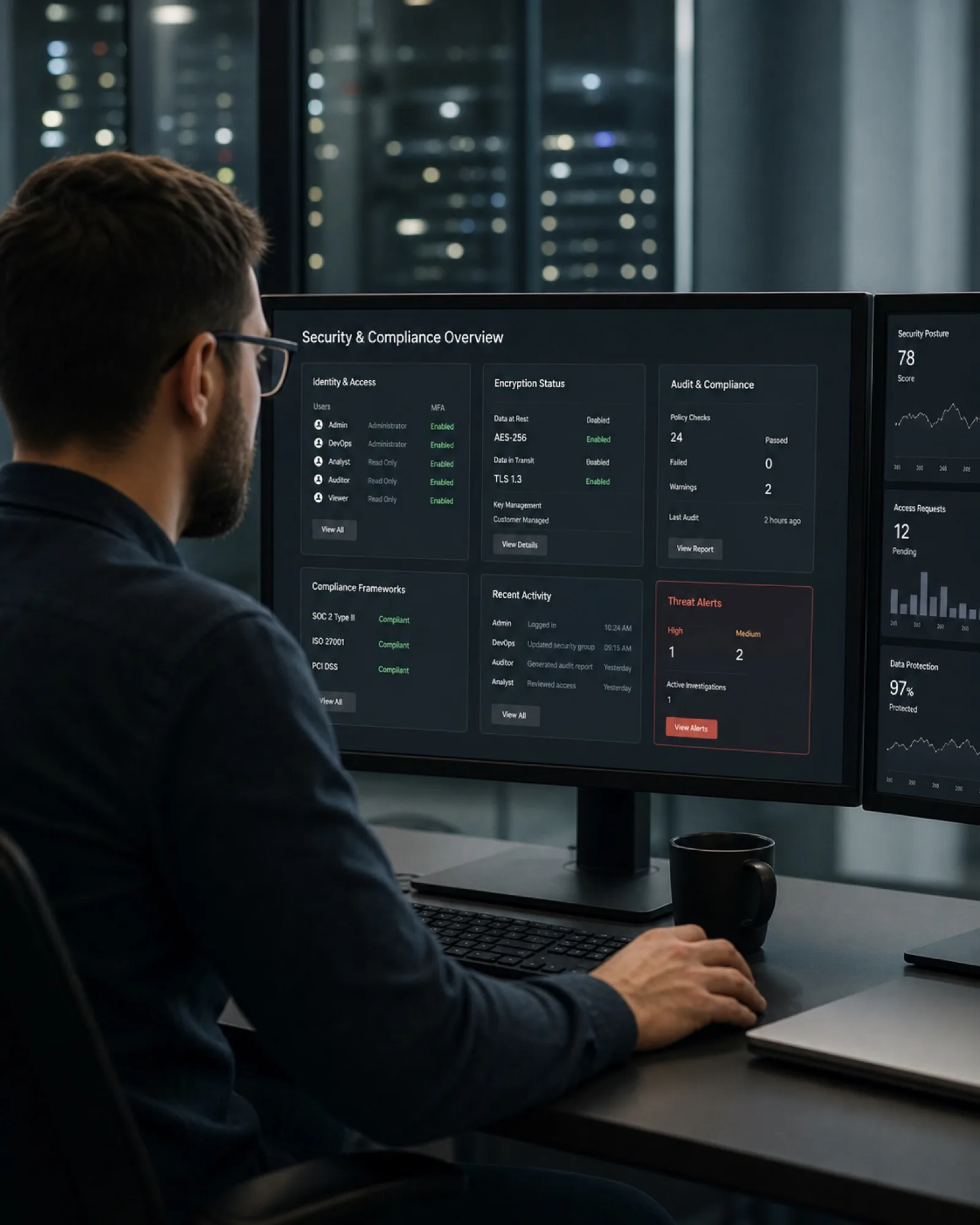
Monitoring, alerts and ongoing management so problems surface before users notice.
Which workloads live where, and why — documented.
Accounts, VPCs and secure inter-cloud connectivity.
Applications packaged to run identically on any provider.
One process ships to every environment.
A single dashboard over all providers.
Failover paths defined, configured and tested.
Spend visibility and budget alerts across accounts.
Your team equipped to operate the setup confidently.
Infrastructure review, architecture design or initial cloud setup.
Full migration of applications and data with staged cutover.
Common questions about our multi-cloud setup service.
Honestly — maybe not. Single-cloud is simpler and cheaper for most businesses, and we'll tell you if that's your case. Multi-cloud earns its complexity for resilience requirements, compliance, cost leverage or specific best-of-breed services.
Unmanaged, yes. That's why we standardize on containers, one deployment pipeline and centralized monitoring — your team operates one workflow while workloads run wherever suits them.
It can: reserved capacity where predictable, spot pricing where tolerant, egress-aware placement, and negotiating power everywhere. The savings must outweigh the added complexity — we'll model both honestly.
It's the starting point, not a write-off. We typically containerize in place, then extend to a second provider for the workloads that justify it.
Get valuable consultation from our professionals to discuss your project. We are here to help you with all of your queries.